The Five Tibetan Rites, often called the “Five Tibetans” or the “Fountain of Youth”, are a short sequence of five movements traditionally repeated up to 21 times each. The whole routine takes 10 to 20 minutes, needs no equipment, and has built a loyal following among people looking for a quick daily practice to wake up the body.
They’re also surrounded by big claims, from reversing aging to balancing hormones. This guide explains where the rites really come from, what they can and can’t do according to current evidence, how to perform each one step by step, and how to practice safely if you’re a beginner.
Where do the Five Tibetan Rites come from?
The rites were first made famous by Peter Kelder in a 1939 booklet called The Eye of Revelation, later republished as Ancient Secret of the Fountain of Youth. Kelder described a retired British army officer who learned the exercises from monks in a remote Tibetan monastery and returned looking decades younger.
Many websites describe the rites as more than 2,500 years old. Historians, however, have found no evidence that they are authentic Tibetan practices, and Tibetan teachers have not recognized them as such. They’re better understood as a Western routine influenced by hatha yoga. Kelder also explained their effects through spinning energy “vortexes” in the body, an idea that has no scientific basis.
None of that means the exercises are useless. Underneath the legend, the Five Tibetans are a well-designed mix of mobility, core strength and controlled breathing, which are genuinely good for you.
What are the real benefits?
There’s very little research on the Five Tibetan Rites specifically. A small number of studies on Tibetan yoga practices and the wider evidence on yoga and exercise suggest the following benefits are realistic:
- Better flexibility and spinal mobility, thanks to repeated forward and backward bending
- Stronger core, hip flexor, shoulder and arm muscles
- Improved balance and coordination
- A gentle energy boost, especially when done in the morning
- Lower stress, through rhythmic movement and focused breathing
- A consistent daily habit, which is often the hardest part of any fitness routine
What the evidence doesn’t support are claims that the rites reverse aging, restore hair color, detoxify the body or cure disease. As one 2026 medical review of a related “7 Tibetans” routine put it, the likely benefits come from regular movement, stretching and breathing, the same effects you’d expect from other low-impact exercise. For a broader look at what yoga can do, see our post on the benefits of yoga for health and fitness.
How to do the Five Tibetan Rites, step by step
Use a yoga mat or soft surface. Breathe in through your nose and out through your mouth or nose, coordinating each movement with your breath. Beginners should start with 3 to 5 repetitions of each rite and add a couple more each week, working up to 21 only if it feels comfortable.
Rite 1: The spin
- Stand tall with arms stretched out to the sides at shoulder height, palms facing down.
- Fix your eyes on one spot in front of you.
- Slowly spin clockwise (to your right) on the spot, keeping your head and arms level.
- Start with just 3 to 5 turns. Stop if you feel dizzy.
Tip: After spinning, stand with your hands on your hips and take a few deep breaths before moving on. Skip this rite if you have vertigo, balance problems or are prone to motion sickness.
Rite 2: Leg and head lift
- Lie on your back with arms by your sides, palms down.
- Breathe in as you lift your head, tucking your chin toward your chest, and raise your straight legs toward the ceiling.
- Breathe out as you slowly lower your head and legs back to the floor.
Tip: Bend your knees if your lower back lifts off the floor or feels strained. Pressing your lower back into the mat protects it.
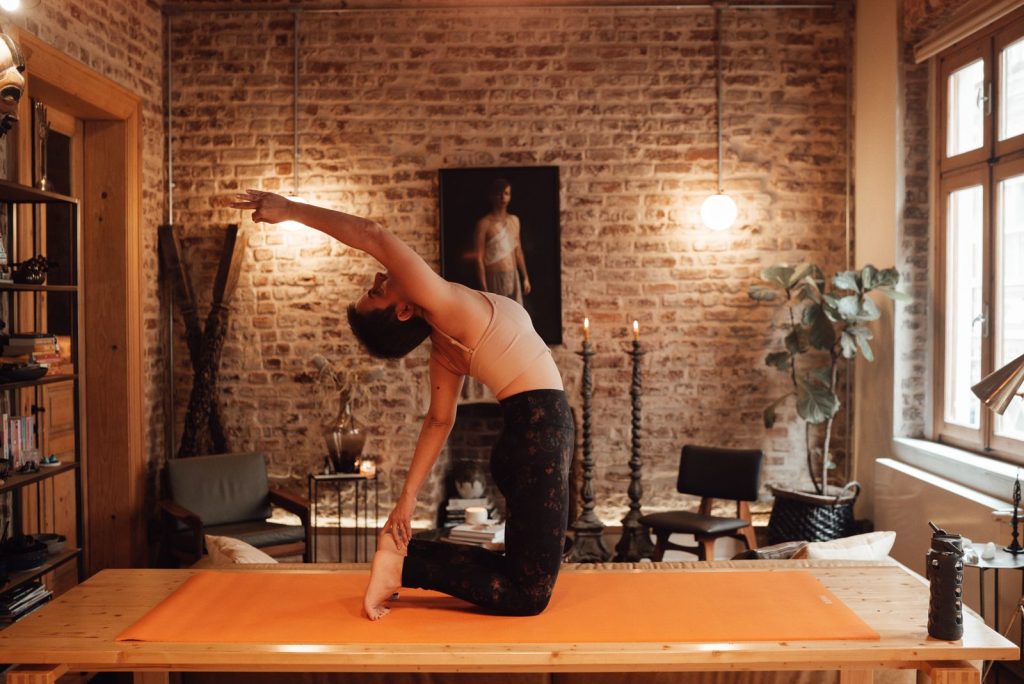
Rite 3: Kneeling backbend (camel)
- Kneel with knees hip-width apart and toes tucked under. Place your hands on the backs of your thighs or lower back.
- Breathe out and gently tuck your chin to your chest.
- Breathe in as you lift your chest and arch backward, letting your head follow gently.
- Breathe out and return to upright, chin to chest.
Tip: Keep the bend small at first and move from your upper back. Don’t drop your head back sharply if you have neck problems.
Rite 4: Tabletop bridge
- Sit with your legs straight in front of you, feet hip-width apart, and hands on the floor beside your hips, fingers pointing toward your feet.
- Tuck your chin to your chest.
- Breathe in as you bend your knees, press through your feet and hands, and lift your hips until your body forms a tabletop, with your head gently tilted back.
- Breathe out and lower back to sitting.
Tip: If lifting all the way is hard, just raise your hips a few inches. This rite strengthens the arms, glutes and back.
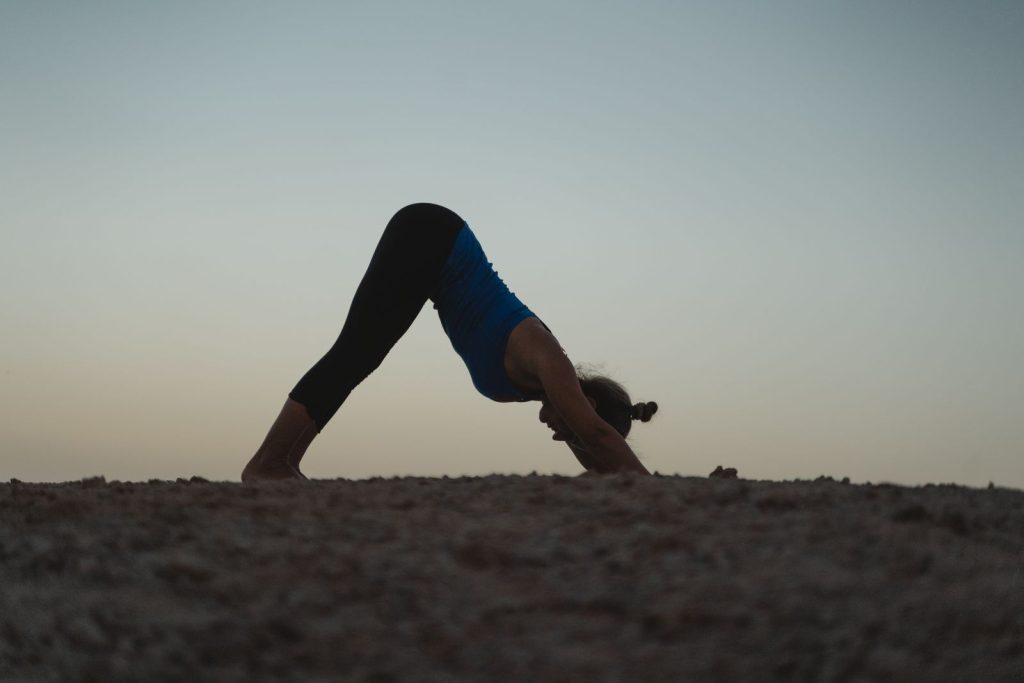
Rite 5: Upward dog to downward dog
- Start face down in an upward-facing dog: hands under shoulders, chest lifted, legs extended and tops of the feet or toes on the mat.
- Breathe in as you lift your hips up and back into an inverted V shape (downward-facing dog), drawing your chin toward your chest.
- Breathe out as you lower back into upward dog.
Tip: Bend your knees in downward dog if your hamstrings are tight. Keep your shoulders away from your ears. New to these poses? Our guide to yoga poses for beginners breaks them down in more detail.
Common mistakes to avoid
- Rushing the reps. Moving too fast turns a controlled practice into a scramble and raises the risk of strain. Let each movement follow a full breath.
- Jumping straight to 21. Many people feel sore or dizzy when they start with the full count. Build up over several weeks.
- Holding your breath. Breathing steadily is part of the practice and helps keep your blood pressure stable.
- Cranking the neck. In the backbends, lead with your chest and upper back rather than throwing your head back.
- Locking the knees and elbows. Keep a soft bend to protect your joints, especially in rites 4 and 5.
- Practicing straight after a big meal. Leave a couple of hours after eating, or practice first thing in the morning.
If something consistently hurts, modify the movement or skip that rite. A yoga teacher or physiotherapist can suggest an alternative that works the same muscles more comfortably.
Building a routine that lasts
- Week 1: 3 repetitions of each rite, daily or most days
- Weeks 2 to 4: add 2 repetitions per rite each week
- Beyond: continue building gradually toward 21, but there’s no evidence that 21 is a magic number. Consistency matters more than reaching it.
Many people like to do the rites first thing in the morning on an empty stomach, followed by a few minutes of quiet breathing or meditation. If you’d like to add breathwork, explore our guide to pranayama for beginners or our tips for starting meditation.
The Five Tibetans are a nice complement to other activity, but they don’t replace aerobic exercise or full strength training. Aim to meet the overall weekly activity guidelines too; our article on the benefits of regular physical activity explains how much is recommended.
Safety: who should be careful
Like any exercise program, start slowly and listen to your body. Talk to a doctor or physiotherapist before trying the rites if you have:
- Back, neck, hip or wrist problems, or recent surgery
- Heart disease or high blood pressure, especially uncontrolled
- Vertigo, dizziness or balance problems (avoid the spinning rite)
- Multiple sclerosis, Parkinson’s disease or other neurological conditions
- Pregnancy, particularly for the spinning and backbending movements
- A hernia or abdominal surgery
Stop if you feel sharp pain, dizziness or shortness of breath. Some gentle muscle soreness in the first week is normal. If you have a specific health condition, our article on conditions yoga can help manage is a helpful read, but a qualified instructor can tailor movements to your needs.
Common questions
Are the Five Tibetan Rites really Tibetan?
There’s no evidence they are authentic Tibetan practices. They were popularized by Peter Kelder in 1939 and are best seen as a Western routine inspired by hatha yoga.
Do the Five Tibetan Rites reverse aging?
No scientific evidence shows they reverse aging. Like other regular exercise, they may improve flexibility, strength, balance, energy and mood.
How many repetitions should a beginner do?
Start with 3 to 5 repetitions of each rite and add about 2 per week. Work toward 21 only if it feels comfortable; consistency matters more than the number.
How long does the routine take?
Around 10 to 20 minutes depending on how many repetitions you do and how long you rest between rites.
Can I do the Five Tibetan Rites every day?
Yes, most healthy people can practice daily if they start slowly. Take rest days if you feel sore, and check with a doctor if you have health conditions.
This article is for general information and isn’t a substitute for medical advice. Consult a healthcare professional before starting a new exercise routine.
Explore more yoga routines in our yoga exercise section.