

Cold weather has a way of exposing a bad face-washing habit. In summer you can get away with a quick scrub under hot water. By November, that same routine leaves your cheeks tight, your nose flaky and your moisturizer stinging when it goes on.
The Japanese face wash method is a gentler way to get properly clean. In short: massage a cleansing oil into dry skin, rinse, then wash with a thick, airy foam that barely needs your fingers to touch your face. Finish with plenty of lukewarm water and moisturize straight away. It takes about three minutes and it’s one of the kindest things you can do for winter skin.
Here’s how to do it properly, who should tweak it, and what to make of the viral cleansing “rules” doing the rounds online.
What makes it “Japanese”?
Japanese skincare has long put the emphasis on cleansing well and touching the skin as little as possible. There’s no single official method. What’s gone viral is a combination of habits you’ll see again and again in Japanese routines.
First comes oil cleansing. Sunscreen, makeup and the oil your skin makes during the day are all oil-based, and oil dissolves oil far better than water does. Then comes the foam. Instead of rubbing cleanser straight onto your face, you whip it into a dense lather in your palms or with a foaming net. That foam acts as a cushion, so the bubbles do the cleaning and your fingers don’t drag.
The rinse matters more than people think. Many Japanese routines suggest 20 or more splashes of lukewarm water so nothing is left behind. Then you press, rather than rub, a towel against your skin.
If you’ve heard of Korean double cleansing, it’s the same basic idea. The Korean version tends to be longer and is often part of a many-step routine. The Japanese take is quicker and pays more attention to foam quality and a light touch.
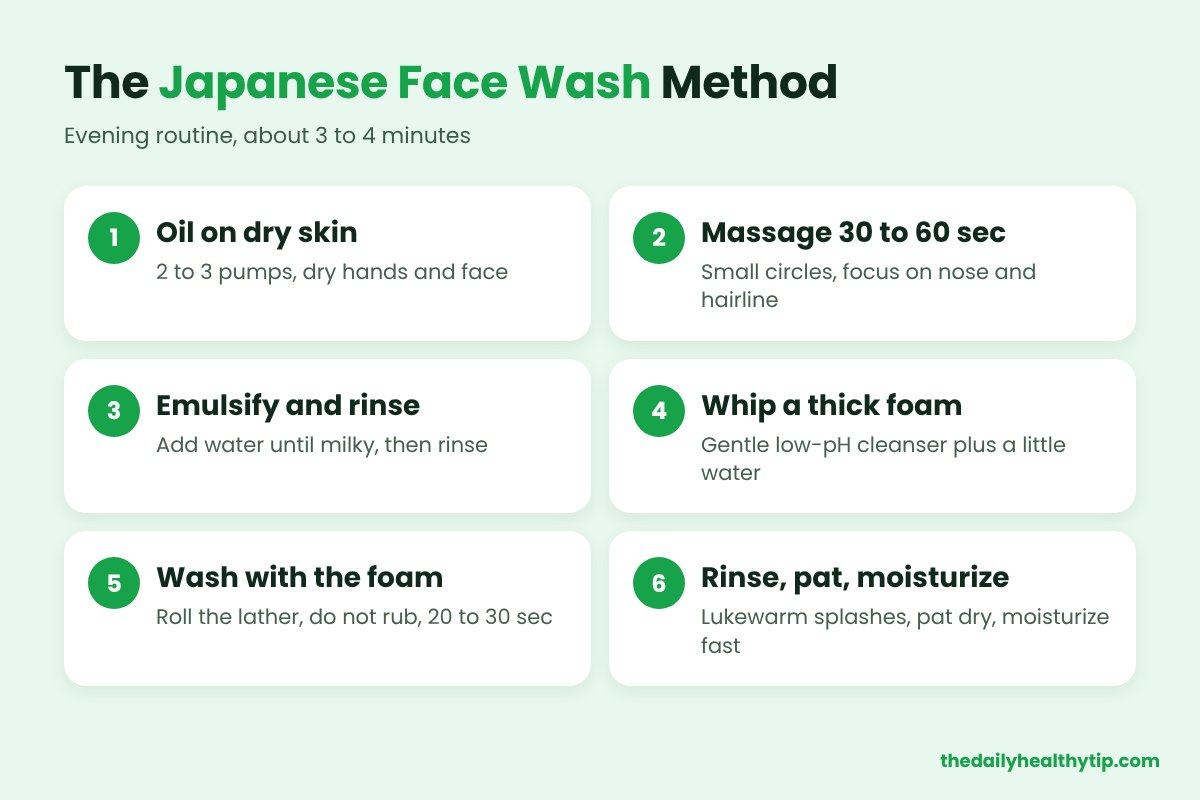
The routine, step by step
Do this in the evening. Mornings need far less, which we’ll get to.
- Start dry. Tie your hair back. Pump two or three squirts of cleansing oil into dry hands. Wet hands stop the oil from working.
- Massage for 30 to 60 seconds. Use small circles over your whole face. Spend extra time around the sides of your nose, your chin and along the hairline, where sunscreen builds up. Close your eyes and press gently over the lids to loosen mascara.
- Emulsify. Wet your fingertips and keep massaging until the oil turns milky. This is the step most people skip, and it’s why some find oil cleansers greasy. Emulsified oil rinses off cleanly. Rinse with lukewarm water.
- Make a proper foam. Put a pea-sized amount of a gentle, low-pH foaming or gel cleanser in one palm, add a few drops of water and rub your hands together, or use a foaming net. Keep going until the lather is thick enough to hold its shape for a few seconds.
- Wash with the foam, not your fingers. Place the foam on your face and roll it gently over your skin for 20 to 30 seconds. If you can feel your fingertips dragging, you need more foam.
- Rinse well. Splash 15 to 20 times with lukewarm water, including under the jaw and along the hairline. Hot water feels lovely in winter, but it strips the oils your skin is trying to hold on to.
- Pat dry and moisturize within a minute. Press a clean, soft towel against your skin. Then apply your toner, serum or moisturizer while your face is still a little damp, so it locks some of that water in.
The American Academy of Dermatology gives very similar advice for everyday washing: lukewarm water, a mild non-abrasive cleanser, fingertips instead of washcloths, and gentle patting dry.
Is double cleansing right for your skin in winter?
For a lot of people, yes. Winter air is dry outside and even drier once the heating’s on. A harsh, squeaky-clean wash makes that worse. The Japanese method avoids the problem because the oil does the heavy lifting and the foam step is short and soft.
That said, not everyone needs both steps every night.
If your skin is dry, use the oil step on days you wear makeup or a lot of sunscreen, and skip the foam or swap it for a cream or milk cleanser. On bare-skin days, a single gentle cleanse is plenty.
If it’s oily or combination, you’ll probably love this routine. Choose a light cleansing oil labeled non-comedogenic and don’t let anyone talk you out of moisturizer. Oily skin gets dehydrated too.
If you’re acne-prone, the oil step can actually help by fully removing sunscreen and makeup that might otherwise sit in pores. Stick to non-comedogenic products, keep the massage light and give it a few weeks before judging.
If your skin is sensitive or eczema-prone, be cautious. One gentle, fragrance-free cleanser may be all you need, and it’s worth asking a dermatologist before adding steps.
Looking for more ways to get through the cold months? We’ve covered 8 ways to keep your skin healthy in winter and a head-to-toe winter skincare routine.
Those viral cleansing rules, explained honestly
Scroll skincare content for long enough and you’ll run into a few “rules” with numbers in their names. Some are useful. Some are just long.
The 60-second rule
The idea: massage your cleanser into your skin for a full minute before rinsing. Most of us wash for about ten seconds, which isn’t enough to break down sunscreen. As a reminder to slow down, it’s good advice. Apply it to your oil cleanser, though, not your foam. A full minute of foaming cleanser can leave dry skin tight.
The 4-2-4 rule
This one came out of Korean beauty content. Four minutes massaging oil cleanser, two minutes with a water-based cleanser, then four minutes rinsing with alternating warm and cool water. Ten minutes in total.
It can feel relaxing, and a long oil massage does help with heavy makeup. But there’s no good evidence it cleans better than a shorter routine, and that much water and cleanser contact isn’t ideal for dry winter skin. A minute of oil, thirty seconds of foam and a thorough rinse gets you most of the benefit.
Is a 7-step routine too much?
In winter, for most people, yes. Every extra product is another chance for irritation when your skin barrier is already under strain. A short routine does the job:
- Morning: rinse or a quick gentle cleanse, moisturizer, sunscreen.
- Evening: oil cleanse, gentle foam (optional if you’re dry), one treatment serum if you use one, moisturizer.
Want to add more over time? Our anti-aging tips for your skin cover which extras are actually worth it.
Can you use a vitamin C face wash in winter?
You can, but it’s not the best way to get vitamin C onto your skin. A cleanser sits on your face for less than a minute before you rinse it away. If you want vitamin C for brightness and antioxidant protection, a serum that stays on does far more. If a vitamin C wash leaves you stinging or tight, put it away until spring and use something plain.

Habits that undo a good cleanse
You can have the perfect products and still end up with irritated skin if a few small habits creep in. Hot showers are the worst offender, because the water hits your face for minutes at a time. If you wash your face in the shower, turn the temperature down for that part.
Washcloths, brushes and gritty scrubs used daily are next. They feel like they’re doing something, and they are: wearing down your skin barrier. Save exfoliation for once or twice a week at most, and go gentler in winter.
Washing more than twice a day rarely helps, except after a sweaty workout. Rubbing your face dry with a rough towel undoes the gentle work you just did. And waiting ten minutes before moisturizing lets water evaporate from your skin, which is exactly what you were trying to prevent.
If you wear makeup, taking it off fully every night matters more than any product you buy. Our tips on using natural makeup can help you keep the whole routine gentler.
Do you need to double cleanse in the morning?
Usually not. Overnight your skin collects a little oil and whatever’s left of your night cream. A splash of lukewarm water or a quick wash with a mild cleanser is enough. Save the full routine for the evening, when there’s sunscreen and the day’s grime to remove.
And skip the kitchen cupboard. Coconut and olive oil don’t contain emulsifiers, so they don’t rinse cleanly and can leave a film behind. Coconut oil in particular clogs pores for some people. A cleansing oil made for the face is worth the small cost.
Give the routine two weeks before you decide whether it suits you. Most people notice their skin feels less tight within the first few days. If you’re dealing with persistent redness, flaking or breakouts that won’t settle, a dermatologist can help in ways a cleanser can’t.
Find more gentle routines in our skin care section.